A roof may come with a 20-, 30-, or even 50-year manufacturer rating, but Texas weather can have other plans.
Intense sun, prolonged heat, hailstorms, high winds, heavy rain, and rapid temperature changes can all affect how long a roof actually lasts. For homeowners in Austin and throughout Central Texas, understanding your roof’s expected lifespan can help you plan for repairs, recognize warning signs early, and avoid waiting until a small problem becomes an expensive one.
So, how long does a roof last in Texas?
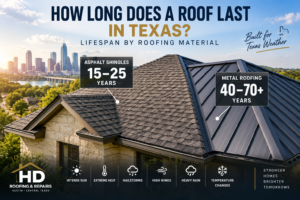
The answer depends heavily on the roofing material, installation quality, ventilation, maintenance, and the amount of severe weather the roof has experienced. Asphalt shingle roofs may last around 15–25 years under typical Texas conditions, while properly installed metal roofing can potentially last 40–70 years or longer.
Here’s what Texas homeowners should know about roof lifespan and when it may be time to consider replacement.
There isn't one lifespan that applies to every roof. Different roofing systems react differently to Texas heat, UV exposure, hail, wind, and moisture.
Here are general lifespan ranges homeowners may see:
These are general estimates rather than guarantees. Two roofs installed in the same year can age very differently depending on the materials used, workmanship, attic conditions, maintenance, tree coverage, storm exposure, and other factors.
That's especially important in Central Texas.
Texas roofs face conditions that aren't necessarily reflected in a manufacturer's advertised lifespan.
During the summer, the surface of a roof can become substantially hotter than the surrounding air.
Repeated exposure to high temperatures can accelerate the aging of certain roofing materials. Asphalt shingles in particular can gradually become brittle, crack, curl, or lose protective granules as they age.
Heat can also expose weaknesses in an improperly ventilated roofing system.
Sunlight doesn't just make your roof hot. Ultraviolet radiation can gradually break down roofing materials.
Years of direct Texas sunlight can cause fading, drying, deterioration of asphalt components, and reduced flexibility.
A roof may therefore look structurally intact from the ground while its materials are gradually losing some of their protective qualities.
Hail is one of the biggest variables affecting roof lifespan in Texas.
A relatively new roof can sustain significant damage during a single severe hailstorm. Asphalt shingles may lose granules or suffer impact damage, while metal roofs can experience denting depending on the material, gauge, profile, and severity of the storm.
Some hail damage is difficult for a homeowner to identify from the ground, which is why having a roof inspected after a significant storm can be worthwhile.
Strong winds can lift shingles, loosen flashing, damage ridge caps, and expose vulnerable areas of the roof.
Once roofing materials are loosened or displaced, water may be able to enter beneath the roof covering during subsequent storms.
Central Texas weather can change quickly.
Roofing materials naturally expand and contract as temperatures rise and fall. Over many years, repeated thermal movement can contribute to wear around seams, flashing, fasteners, penetrations, and other vulnerable areas.
Asphalt shingles remain one of the most common residential roofing materials in Texas.
Under typical conditions, an asphalt shingle roof may last approximately 15–25 years, although premium architectural shingles can potentially last longer.
The actual lifespan depends on several factors, including:
One of the most common signs of aging asphalt shingles is granule loss.
Those small granules aren't merely decorative. They help protect the underlying asphalt from UV exposure. As shingles age, some granule loss is normal, but excessive loss can indicate deterioration or storm damage.
Other warning signs include curling shingles, cracking, missing shingles, exposed areas, damaged flashing, and recurring leaks.
A properly designed and installed metal roof can be one of the longest-lasting roofing options for Texas properties.
Depending on the specific metal roofing system, material, coatings, environment, and installation, a metal roof can potentially last 40–70 years or more.
Metal roofing is particularly attractive in Texas because of its durability and ability to perform in demanding weather conditions.
However, simply having a metal roof doesn't guarantee a long lifespan.
Installation matters enormously.
Poorly installed flashing, fasteners, seams, penetrations, or transitions can create problems regardless of the quality of the metal itself. Different metal systems also perform differently, so homeowners should consider the complete roofing assembly rather than just the visible panels.
Regular inspections can help identify sealant deterioration, loose components, flashing issues, corrosion, or storm damage before they become larger problems.
Clay and concrete tile roofs are known for longevity and can often last 40–75 years or longer when properly installed and maintained.
The tiles themselves can be extremely durable, but homeowners shouldn't assume that means the entire roofing system is maintenance-free.
Individual tiles can crack or break from impacts, foot traffic, falling debris, or severe weather. Components beneath the tiles—including underlayment and flashing—may also require attention before the tiles themselves reach the end of their useful life.
That distinction matters.
A roof is a complete system, not simply the material you can see from the street.
TPO roofing is commonly used on commercial and low-slope buildings.
A properly installed and maintained TPO roofing system can commonly provide approximately 20–30 years of service, although actual performance depends on membrane thickness, installation, drainage, maintenance, rooftop traffic, UV exposure, and other factors.
Texas heat makes installation quality especially important.
Seams, penetrations, drainage areas, flashing, and rooftop equipment should be inspected periodically so small issues can be addressed before water reaches the building.
For commercial property owners, preventative roof maintenance can be particularly valuable because roof problems can disrupt business operations in addition to damaging the building.
Yes. Proper attic ventilation can play an important role in the performance of a roofing system.
During hot Texas summers, poorly ventilated attic spaces can trap substantial heat. Excessive heat and moisture can contribute to problems involving roofing materials, insulation, decking, and the overall attic environment.
A properly designed ventilation system helps manage heat and moisture rather than allowing them to remain trapped beneath the roof.
However, more ventilation isn't automatically better.
Intake and exhaust ventilation should work together as a balanced system appropriate for the home's design.
If you're experiencing unusually high attic temperatures, moisture problems, or premature roof deterioration, the ventilation system should be evaluated along with the roof itself.
Absolutely.
Roof age is only one factor when determining roof condition.
A five-year-old roof that has experienced multiple severe hailstorms may have more damage than a considerably older roof that has avoided major weather events.
That's why homeowners shouldn't rely exclusively on the installation date when deciding whether their roof is healthy.
After a major hail or wind event, look for obvious signs such as missing shingles, damaged gutters, displaced flashing, debris, or visible impacts. Some types of damage, however, may require a closer professional inspection.
If you suspect storm damage, document what you can safely observe and have the roof evaluated before assuming everything is fine.
Age alone doesn't necessarily mean a roof needs replacement.
Instead, consider the age of the roof alongside its current condition.
Warning signs can include:
A single damaged shingle doesn't necessarily mean you need a new roof.
Likewise, a roof that isn't actively leaking isn't necessarily in perfect condition.
The goal should be to determine the overall condition of the roofing system and whether repair or replacement makes more financial sense.
Not necessarily.
If your asphalt shingle roof is approaching 20 years old, that doesn't automatically mean you need to replace it tomorrow.
But it does mean you should pay closer attention to its condition.
A well-installed and maintained roof may still have useful service life remaining. Another roof of the same age may already have widespread deterioration.
This is why an inspection is more useful than making a decision based solely on a calendar.
A roofing professional can evaluate the shingles or roofing material, flashing, penetrations, ventilation, visible decking conditions, drainage, previous repairs, and other components to help determine the roof's overall condition.
When problems are limited to a relatively small area and the rest of the roof remains in good condition, roof repair may be the appropriate solution.
For example, isolated flashing damage or a limited number of missing shingles doesn't necessarily justify replacing an entire roofing system.
Replacement becomes more likely when deterioration is widespread, the roof is approaching the end of its expected service life, leaks repeatedly occur in different areas, or repairs are becoming increasingly frequent.
The key is avoiding two extremes: replacing a roof that still has substantial useful life remaining or repeatedly spending money repairing a roofing system that is clearly failing.
A professional assessment can help determine which option makes the most sense.
You can't control the Texas weather, but you can reduce preventable roof problems.
Have your roof evaluated periodically and after significant hail or wind events. Keep gutters and drainage areas clear. Address leaks promptly rather than allowing moisture to spread. Trim potentially damaging branches when appropriate, and pay attention to attic ventilation and moisture.
Most importantly, don't ignore small changes.
A minor flashing issue or damaged section of roofing is usually easier to address before water penetrates the roof assembly and damages decking, insulation, drywall, or other parts of the home.
Preventative attention won't make a roof last forever, but it can help you get the greatest practical service life from the roofing system.
There isn't a universal inspection schedule that applies to every property.
However, Central Texas homeowners should consider having their roof inspected when there has been a significant hail or wind event, when a leak appears, when visible damage develops, before purchasing or selling a home, or when an older roof begins approaching the end of its expected service life.
You don't need to climb onto the roof yourself.
In fact, homeowners should avoid walking on steep, wet, damaged, or unfamiliar roofing surfaces. Many warning signs can be identified from the ground, from inside the attic, or by a qualified roofing professional.
For Austin-area homeowners, there isn't a single number.
An asphalt shingle roof may provide roughly 15–25 years of service, while metal, tile, and other premium roofing systems can last substantially longer. But Austin's heat, UV exposure, hail, wind, installation quality, ventilation, and maintenance can all influence the actual lifespan.
That's why the better question isn't simply:
“How old is my roof?”
It's:
“What condition is my roof in right now?”
If your roof is aging, has recently been through severe weather, or is showing signs of deterioration, an inspection can help you understand whether you're dealing with an isolated repair or whether it's time to start planning for replacement.
If you're unsure how much life your roof has left, HD Roofing & Repairs can evaluate the condition of your roofing system and help you understand your options.
We serve homeowners and property owners throughout the Austin and Central Texas area with roof inspections, roof repair, roof replacement, storm-damage evaluations, metal roofing, and other roofing services.
Whether your roof is showing signs of age or you've recently experienced hail or high winds, identifying problems early can help prevent more extensive damage.
Contact HD Roofing & Repairs today to schedule a roof inspection and find out what condition your roof is really in.